

#Food Trends - How Social Media Shapes Food Habits
As an Amazon Associate I earn from qualifying purchases. Please read my Disclaimer page.
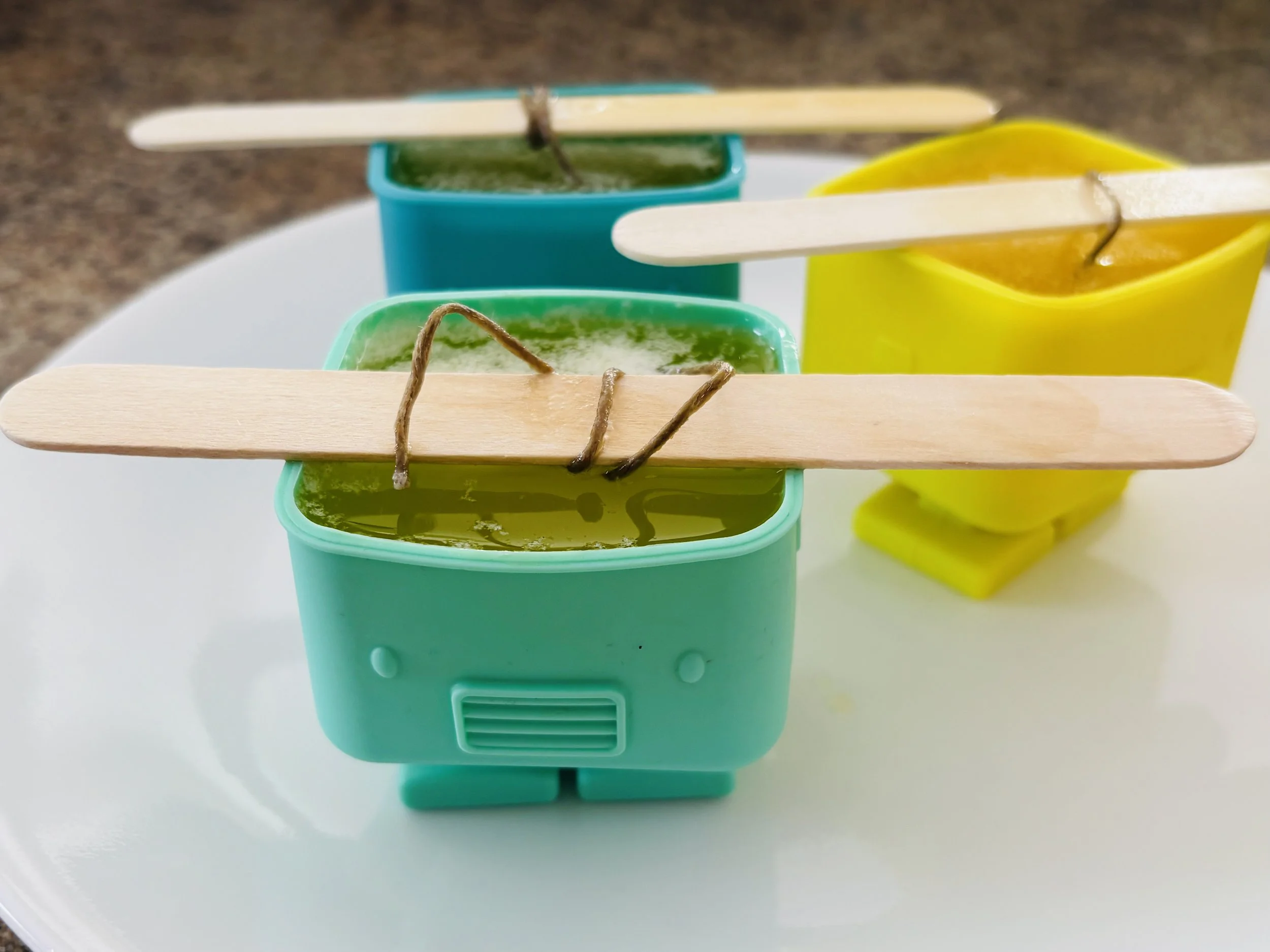
I’ve been thinking a lot about food trends over the past year. This winter, the girls and I made #ButterCandles and #SnowIceCream (or #SnowCream) – with mixed success. Though the beautiful pictures and easy-to-follow videos that bombarded my Instagram feed for the past months made both these food trends look easy, the reality was quite different: a good butter candle is tricky and making ice cream in a snowbank in –40 Celsius degree weather is really, really cold.
I’ve just finished reading a number of fiction and nonfictions works that have me reflecting on social media’s influence in our food choices. Liann Zhang’s Julie Chan Is Dead is a fictionalize story, sure, but Zhang’s work is an important look at the power influencers have on our lives. From getting people to buy products like ingredients, content creators shape our idea of what we want our world to be.
In my case, I admit, I want to be the chick and fancy person who makes butter candles and sits around with friends eating it. And even if we if we used our favourite Cream Base recipe from our Ben & Jerry’s Homemade Ice Cream & Dessert Book rather than any of the recipes we found online, I want to be the cool mom who makes ice cream outside. Though let’s be real - I’m absolutely not cool enough to actually let my kids put real snow in the mixture. I agree that snow is bad for one’s health. (Check out Megan DeLaire’s January 2024 article “Scientist weighs in on ‘snow cream’ trend, says snow is ‘anything but pure’.”)
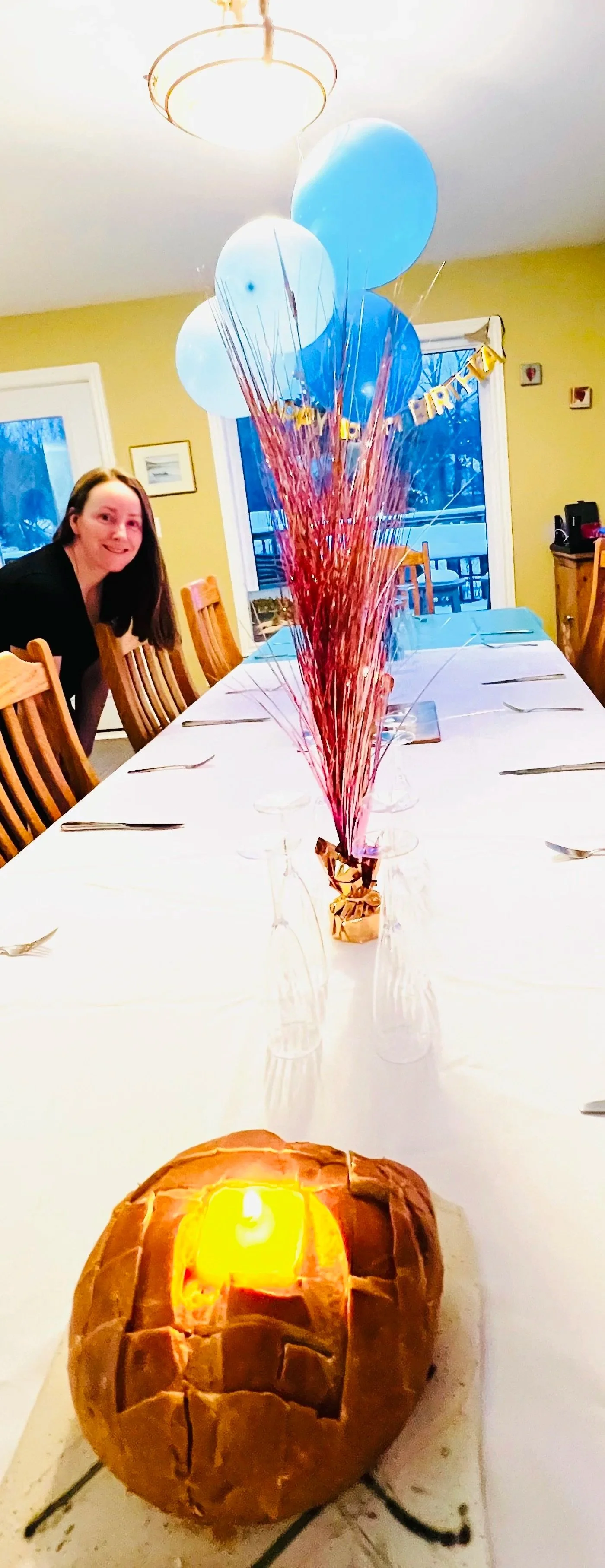
Nevertheless, I used both these foods to create specific versions of myself and my world. I plunked down the $14 for organic wick and $30 in an assortment of bread loaves so that I could have butter candles as the centre pieces at my daughter’s sweet sixteen birthday party. I bought two types of cream and bundled myself up to stand outside in the frigid, blowing cold and kept whipped those ingredients together long after my kids had quit.
In both cases, we discovered, as Zhang’s book highlights, that what you see online is not what you actually get in real life. Butter candles work best when you only use clarified butter - making this an expensive accessory to the meal. Our Snow Cream took over a half hour to come to the right texture. That represented the same amount of time and much more effort than our Kitchen Aid stand mixer attachment takes.
In their introduction to Food Instagram: Identity, Influence, and Negotiation Emily J.H. Contois and Zenia Kish, summarize the argument of the many contributors to the book by saying that Instagram produces "value through visually appealing products that are consumed first through the eyes” (24). The collection of essays demonstrates that “Instagram does not just represent our food system, or elements of it, through photographs. It helps to produce food systems through its visual economy, linking farms to food bloggers to restaurants to eaters in novel and potentially profitable ways” (24 - emphasis in the original).
Our experiences with these two food trends show the system at work: the pictures enticed the purchase of material goods. We didn’t need butter candles or to make ice cream outside, but we were sold by the “illusion of frictionless access to beautiful food” (25). We were drawn in by the illusion of simplicity and the promise of fun and status.
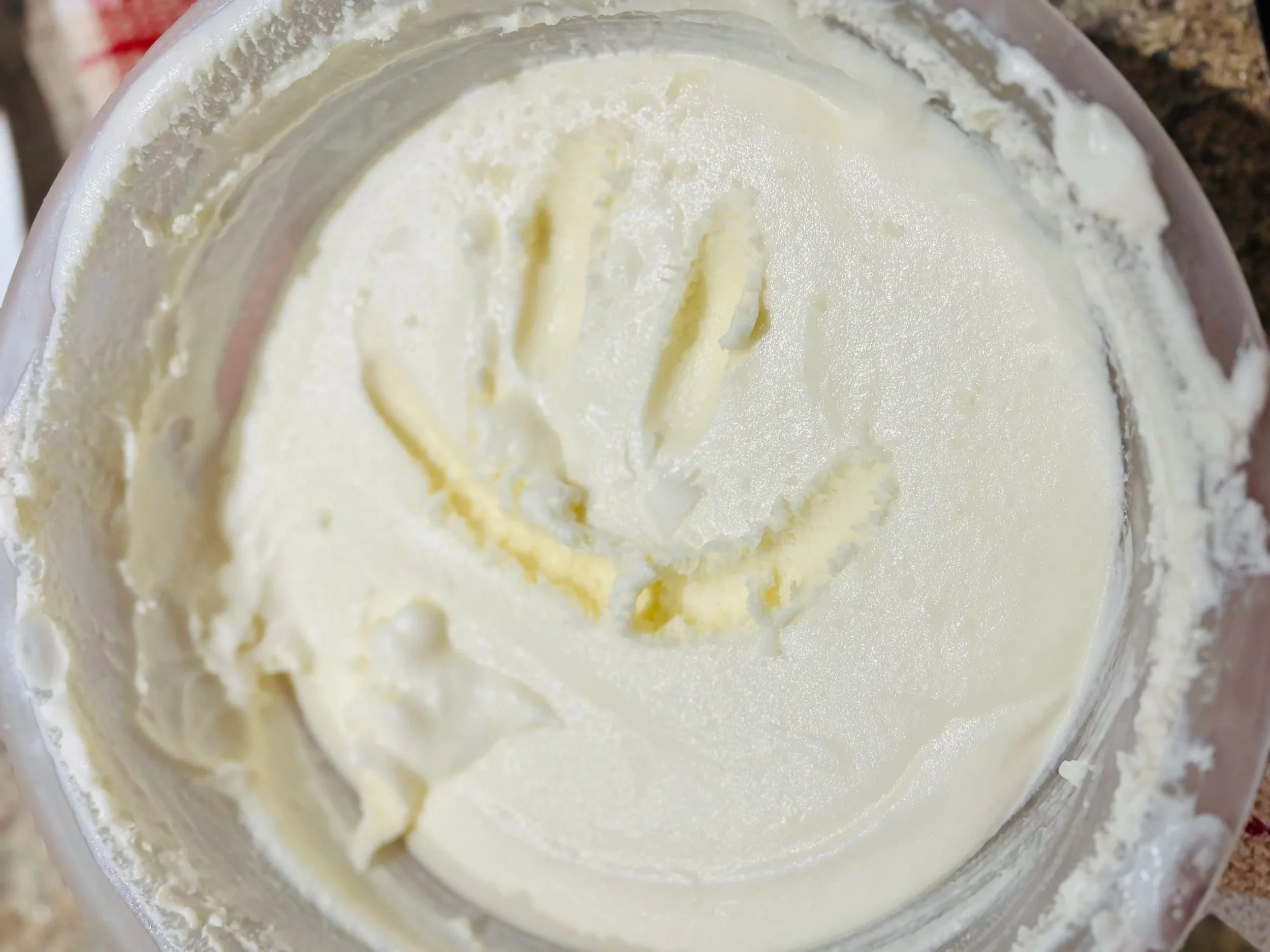
In Julie Chan is Dead, the main character demonstrates the power social media has in erasing the network that produces action. While my daughters and I had lots of questions during both activities (Why is salt a necessary element in making homemade ice cream? How would snow help the cream turn to ice versus the cold air? Why does the clarified butter solidify better than melted butter that includes the darker stuff? Is that other stuff butter cream?...), we did not question where our ingredients came from. We went to the store, bought them, and brought them home. We didn’t ask who had packed them, shipped them, put them on the shelves. We didn’t, as Tanya Lewis in her article “Digital food: from paddock to platform” reminds us to do, ask who had determined that Butter Candles and Snow Cream were good fits for our Instagram feeds or what parts of those pictures or the content matched our algorithms. Despite the fact that I have my high school students do a food study project that focuses specifically on understanding the complex system that gets food items to them, at home, on the weekend, when it was for fun, we didn’t. And when we posted pictures of the final product, we, like the average “ordinary” (Lewis) person, didn’t think of the ways in which we were validating the algorithm or even the community of makers we were joining.
Like the foods our parents and grand-parents, neighbours, colleagues, and friends make, social media is an important place to gather ideas and inspiration. Like any other recipe we decide to make, social media platforms like Instagram have tremendous power in shifting or maintaining our sense of who we are.
What trends have you tried? What pictures of food have you added to Instagram or other social media platforms? I’d love to hear from you!
Bibliography
Contois, Emily J. H. and Zenia Kish. “Introduction: From Feed to Seed How Food Instagram Changed What and Why We Eat.” Food Instagram : Identity, Influence, and Negotiation, edited by Emily J. H. Contois, and Zenia Kish, University of Illinois Press, 2022. ProQuest Ebook Central, http://ebookcentral.proquest.com/lib/queen-ebooks/detail.action?docID=6915669.
Created from queen-ebooks on 2026-02-18 10:01:17. p. 9-37.
David, Gaby and Laurence Allard. “#Foodporn An Anatomy of the Meal Gaze.” Food Instagram : Identity, Influence, and Negotiation, edited by Emily J. H. Contois, and Zenia Kish, University of Illinois Press, 2022. ProQuest Ebook Central, http://ebookcentral.proquest.com/lib/queen-ebooks/detail.action?docID=6915669.
Created from queen-ebooks on 2026-02-18 10:50:53. p. 87-107.
DeLaire, Megan. “Scientist Weighs in on ‘Snow Cream’ Trend, Says Snow Is ‘Anything but Pure.’” CTVNews, 29 Nov. 2024, www.ctvnews.ca/health/article/scientist-weighs-in-on-snow-cream-trend-says-snow-is-anything-but-pure/.
Lee, Sarah. “London | Latest News & Updates.” BBC News, BBC, 28 Dec. 2017, www.bbc.com/news/england/london.
Lewis, Tania. “Digital food: from paddock to platform.” Communication Research and Practice, 2018: 4(3), 212–228. https://doi-org.proxy.queensu.ca/10.1080/22041451.2018.1476795
Newman, Michael Z. “@hotdudesandhummus and the Cultural Politics of Food.” Food Instagram : Identity, Influence, and Negotiation, edited by Emily J. H. Contois, and Zenia Kish, University of Illinois Press, 2022. ProQuest Ebook Central, http://ebookcentral.proquest.com/lib/queen-ebooks/detail.action?docID=6915669.
Created from queen-ebooks on 2026-02-19 10:49:47. p. 48-65.
Zhang, Liann. Julie Chan Is Dead. Simon & Schuster Canada, 2025.